
Feldwert
What Berlin gains from the Tempelhofer Feld, and stands to lose
An upcoming project by Generation iTrust
Overview
Feldwert puts a value on what Berlin's Tempelhofer Feld gives its people and its environment. These benefits rarely appear in development debates because no one has put a number on them. We review the existing research, turn the Feld's social and environmental contributions into monetary figures using established valuation methods, and build a simple app that shows what would be lost if parts of the field were developed. The aim is to give citizens and decision-makers clear, comparable evidence ahead of Berlin's September 2026 elections and to put a real tool in the hands of the movement working to protect the Feld.
We can measure a great deal, yet the Feld is worth more than the sum of its parts.

Background
The Tempelhofer Feld is the site of Berlin's former Tempelhof Airport, spanning the districts of Neukölln and Tempelhof. Since it opened to the public in 2010, the feld has drawn thousands of Berliners and visitors to cycle, skate, garden, picnic and gather. It is one of the few places in the city that offers a genuine sense of expanse. It covers more than 300 hectares of open space, one of the largest inner-city open spaces in the world, and its meadows shelter protected ground-nesting skylarks, kestrels, wild bees and butterflies. The Feld is also a vivid example of democracy playing out at the municipal level, and it has taken a great deal to keep it the open, public space it is today. In 2014, when the Senate had plans to build on the land, a citizens' movement — 100% Tempelhofer Feld — gathered more than 185,000 valid signatures and won a referendum, with 64.3% voting to build nothing and keep the feld as it is. The result became law, the ThF-Gesetz (ThFG). This was direct democracy in action. But the push to change the Feld did not stop. In 2024, after the governing CDU–SPD coalition decided to examine options for "gentle" development along the field's edges, the Senate launched a two-phase international ideas competition, which concluded in 2025 with six winning designs. Only two propose building along the edges; the other four leave the field entirely open, resisting any move to privatise it. Reopening the question is usually framed as a response to Berlin's housing shortage. Yet more than 40,000 homes stood empty across Berlin at the last census. Addressing long-term vacancy and the misuse of housing is slower, less visible work than building on open land, so the Feld can look like the easier answer. Alongside the competition, Berlin ran a randomly selected citizens' panel — the Dialogwerkstatt — on the Feld's future. A clear majority came out against building on the Feld, favouring instead the further development of its existing cultural, sporting and community uses. The next decision point is the election on 20 September 2026, when Berliners choose the Abgeordnetenhaus (House of Representatives) and the district assemblies (BVV). What happens around that vote will shape the Feld for a long time to come.
Feldwert
When people make the case for building, the benefits are easy to count: how many apartments, how much revenue, how many square metres. The benefits of leaving the Feld open are just as real, but almost no one has put a number on them. Feldwert sets out to change that, to give the Tempelhofer Feld's social and environmental value a place in the debate, measured in terms decision-makers already use.
The inherent value of nature can never be reduced to a number, and we don't pretend otherwise. What we are doing is make visible what the Feld already gives Berliners — space to move, to meet, to belong to nature and to one another.
Feldwert gives the people's movement a tool to shift a lopsided debate and to defend the democratic decision behind the Feld.


What we are building
We are turning the Feld's benefits into evidence that citizens and decision-makers can grasp in seconds.
2. Organise the indicators.
We group them into social indicators (recreation, physical and mental wellbeing, space for human connection, community, and so on) and environmental indicators (heat and climate mitigation, air quality, biodiversity, water, and so on). Each is backed by the available statistics for the Feld.
3. Translate value into figures.
Using full-cost-accounting and ecosystem-services methodologies and data from credible sources such as Eurostat, the European Environment Agency and so on we estimate the monetary value each indicator represents — the tangible benefits, the human-nature relationship, and the space the Feld holds for human-to-human interaction.
1. Ground the work in existing research.
We review the studies, statistics and projects already carried out on the Tempelhofer Feld to identify the indicators that best capture its value.
4. Compare the alternatives.
We set these figures against what alternative development proposals would deliver, so the trade-offs are transparent rather than assumed.
5. Make it interactive.
We are building a simple, accessible app with sliding scales that show what losing different parts of the Feld to development would mean — the social and environmental value that would be given up in each case. The goal is a tool simple enough for a decision-maker to reach a considered judgement in minutes.
Where we are
We are at the start: gathering research and defining the indicators, with a user-friendly app MVP (Minimum Viable Product) in early development. Our target is to have results ready to share with citizens and decision-makers ahead of the September 2026 elections.
Decision Intelligence for Better Cities
Every planning decision shapes the future of a city. Yet decision makers are often faced with fragmented data, competing priorities, and limited time. We are building a new generation of decision intelligence tools that bring complex information together in one clear and interactive dashboard.
By combining environmental, social, economic, governance, and quality of life indicators, the platform enables users to compare scenarios, understand trade offs, and evaluate the long term impact of different choices in just a few minutes.
Our ambition is clear: to create a tool simple enough for a decision maker to reach a considered judgement in minutes, and compelling enough for a citizen to explore, understand, and share.
Our ambition is clear: to create a tool simple enough for a decision maker to reach a considered judgement in minutes, and compelling enough for a citizen to explore, understand, and share. From the Genuine Progress Index, applied in Bhutan for the Gross National Happiness Index

The team
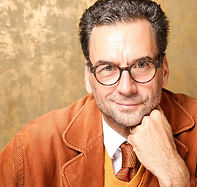
Marc Leberecht- Schneider
Concept and collaboration

Sashank Kumar
Project Management and Full Cost Accounting

Andreas Lehner
App Development

Daniel Moraes
Research, Content Creation and Website
The team
This is an open, community-driven effort, and it grows with the people behind it. We will soon be launching a crowdfunding campaign to get the project off the ground — any support, whether through your networks or a donation, would be much appreciated.
Support the crowdfunding. - Launching Soon
Please help by sharing it within your networks.
Contribute
Researchers, data specialists, designers, people working in the municipality, environmentalists, activists and anyone open and eager to contribute to the Feld are welcome.
Follow along as the tool and the people’s movement take shape.